
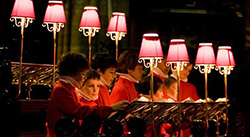
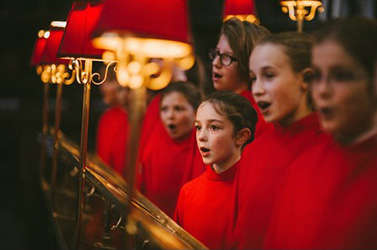
1912 - Cathedral School
(also known at the time as 'The Chorister School'
 Exeter Cathedral School has its origins in the chorister school established by the late 12th century for the education of the boys who sang in the daily sung services in the Cathedral. Until the mid-19th century the choristers received their musical tuition from the Cathedral organist, and the boys were instructed in the basics of writing, grammar and arithmetic by visiting teachers.
In 1838 a Diocesan Board of Education was set up, establishing an innovative new teacher training institute in a property behind 8 and 9, The Close. The choristers were taught by the trainee teachers until 1852 when the Dean & Chapter recruited Edmund Foweraker, a 17-year-old student at the training institute, to undertake the choristers’ schooling. In 1856, the training institute building was refitted as a boarding school and the new Cathedral School was established. By that time, in addition to music, the boys were also taught Latin, French, scripture, grammar, literature, arithmetic, algebra, drawing and drill.
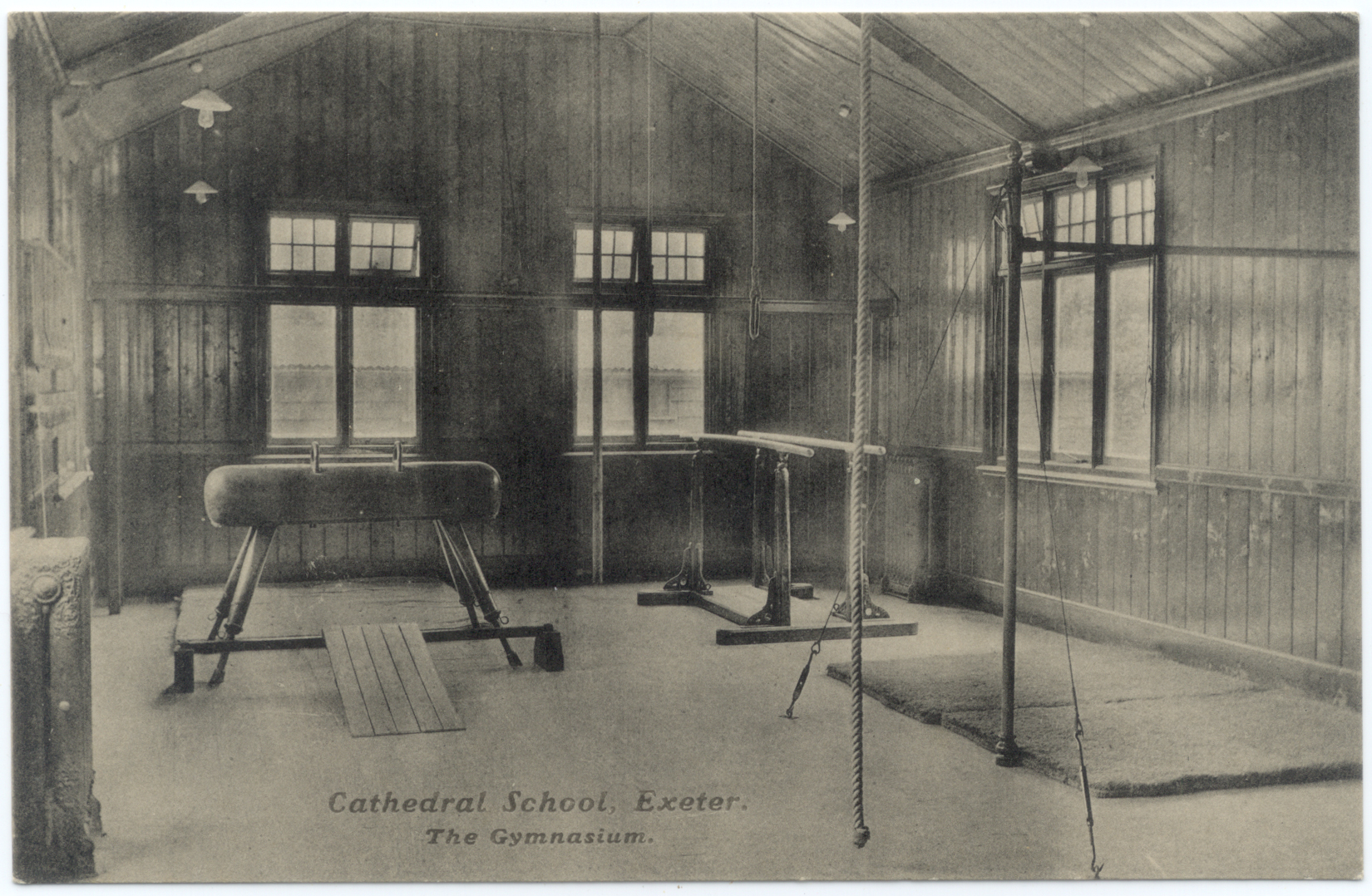
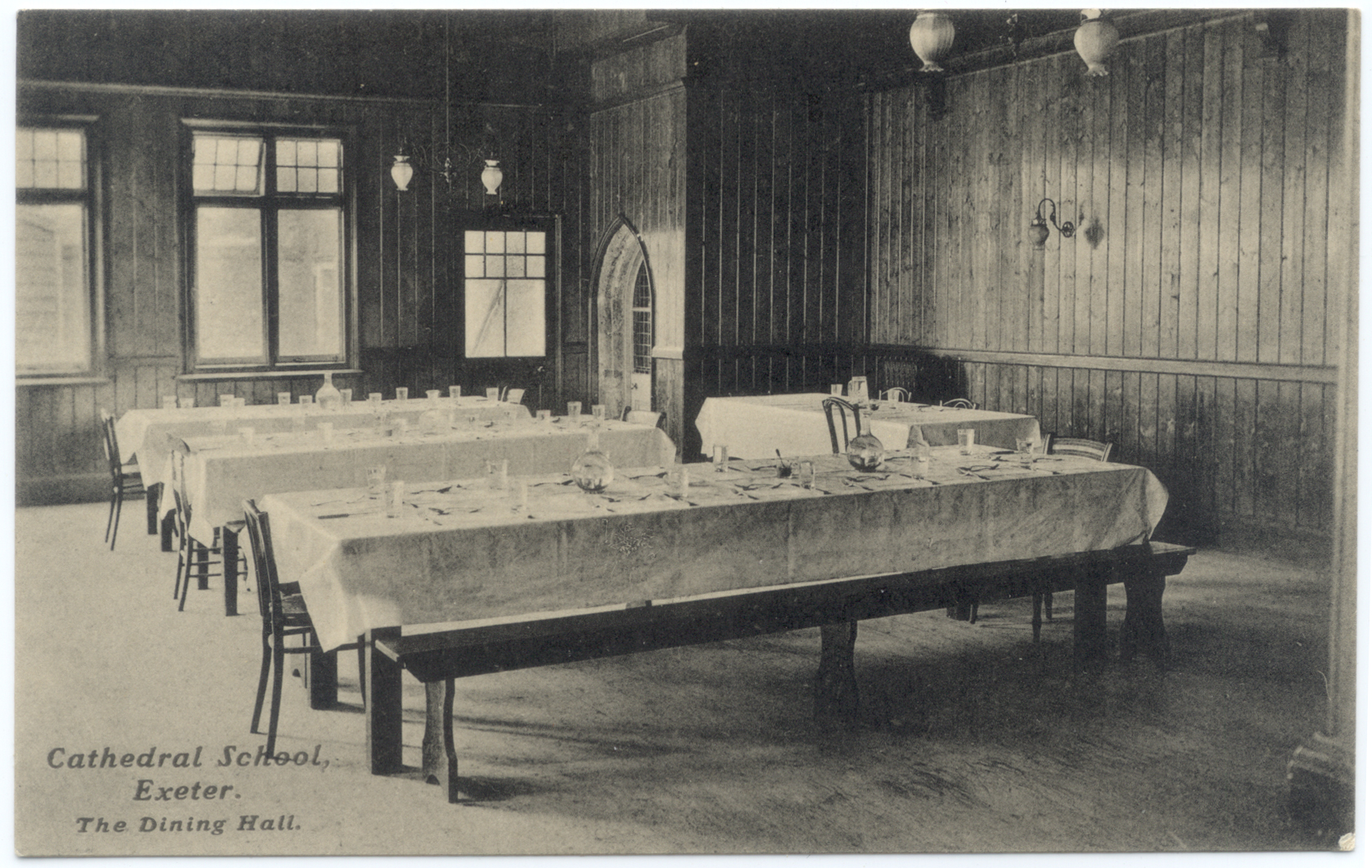
The school was further expanded in the 1890s, taking private pupils as well as the choristers, and in the early years of the 20th century new buildings were added to provide additional facilities, including a new dining hall, gymnasium and rifle range.
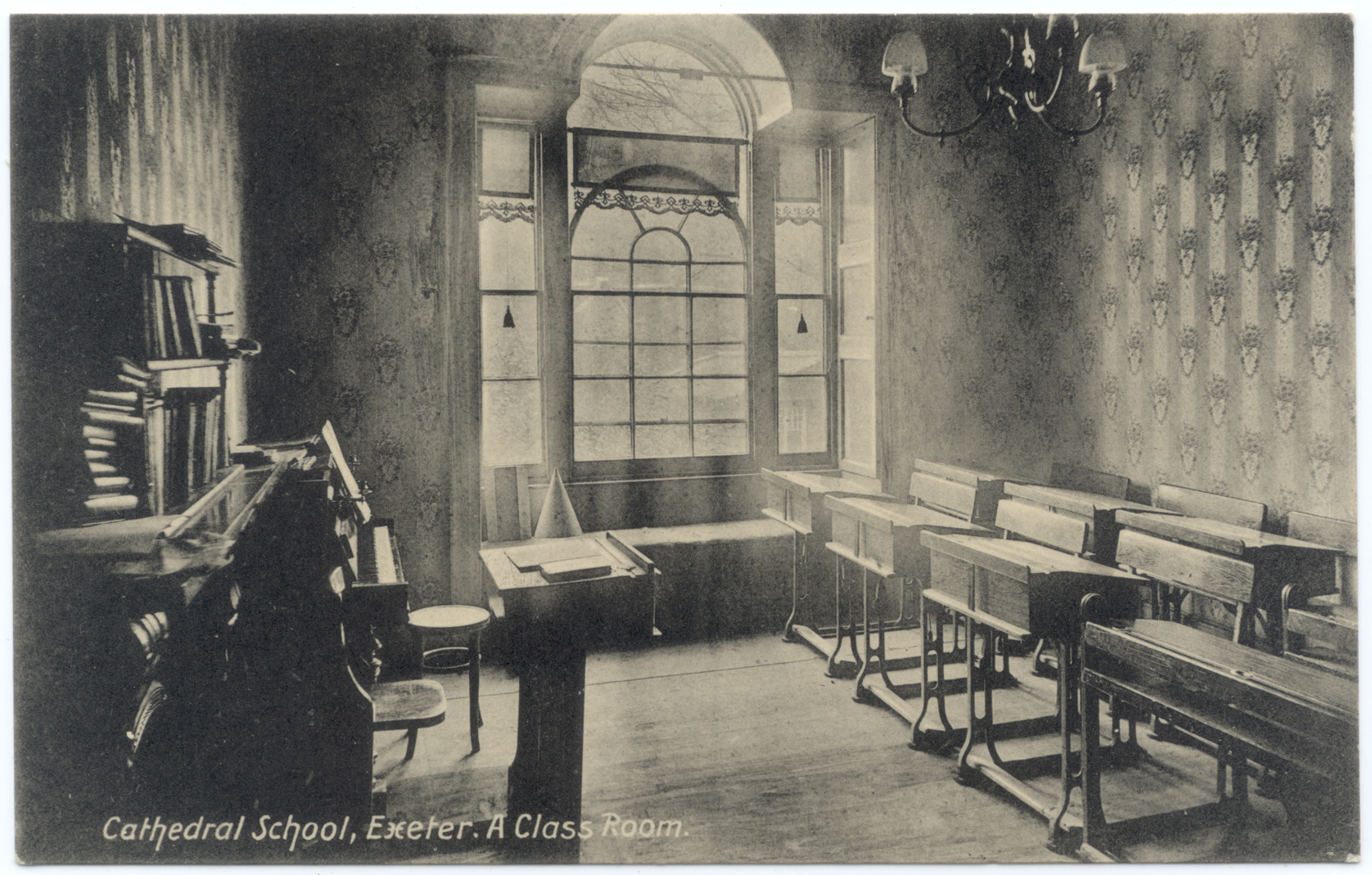
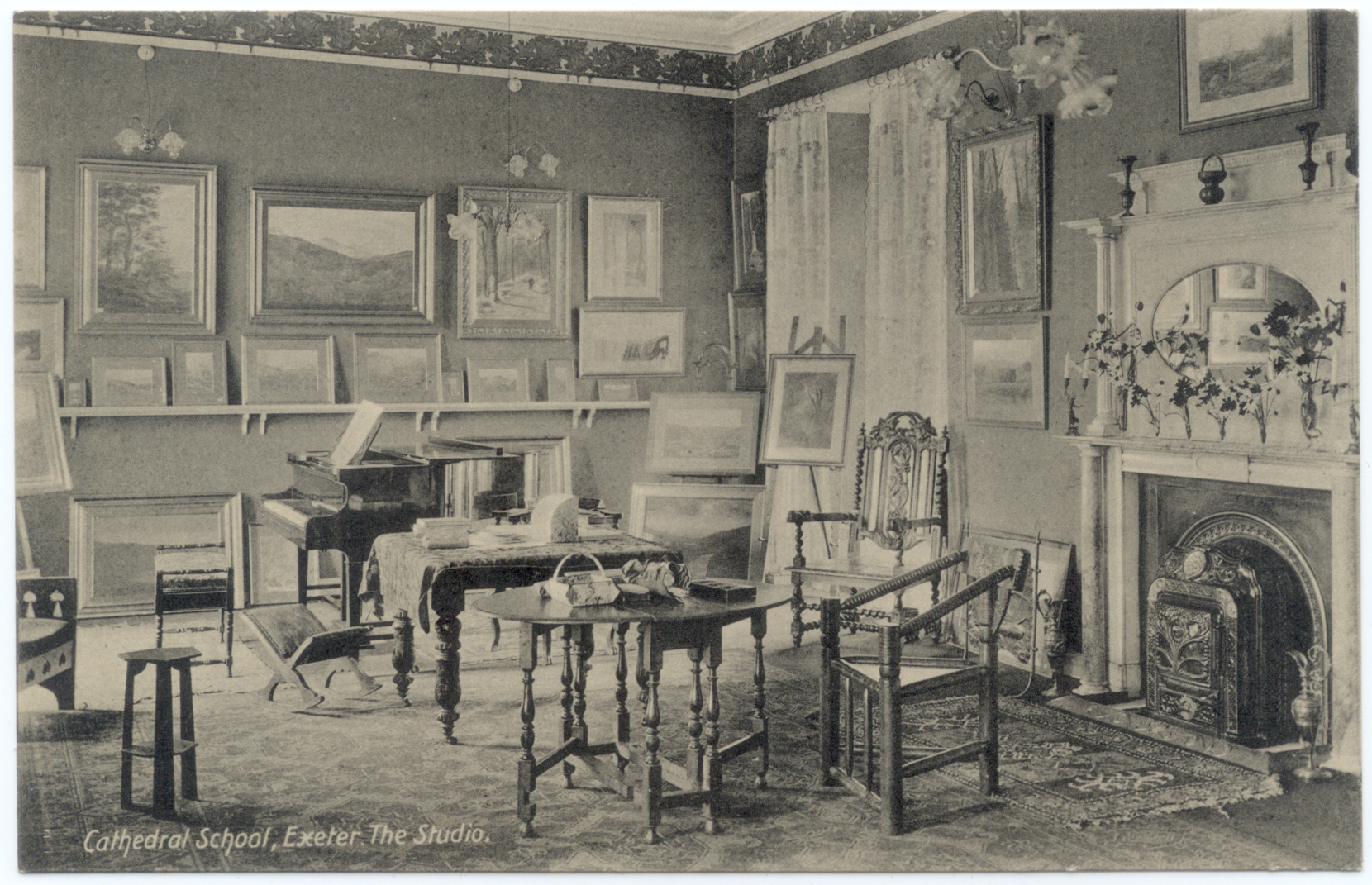
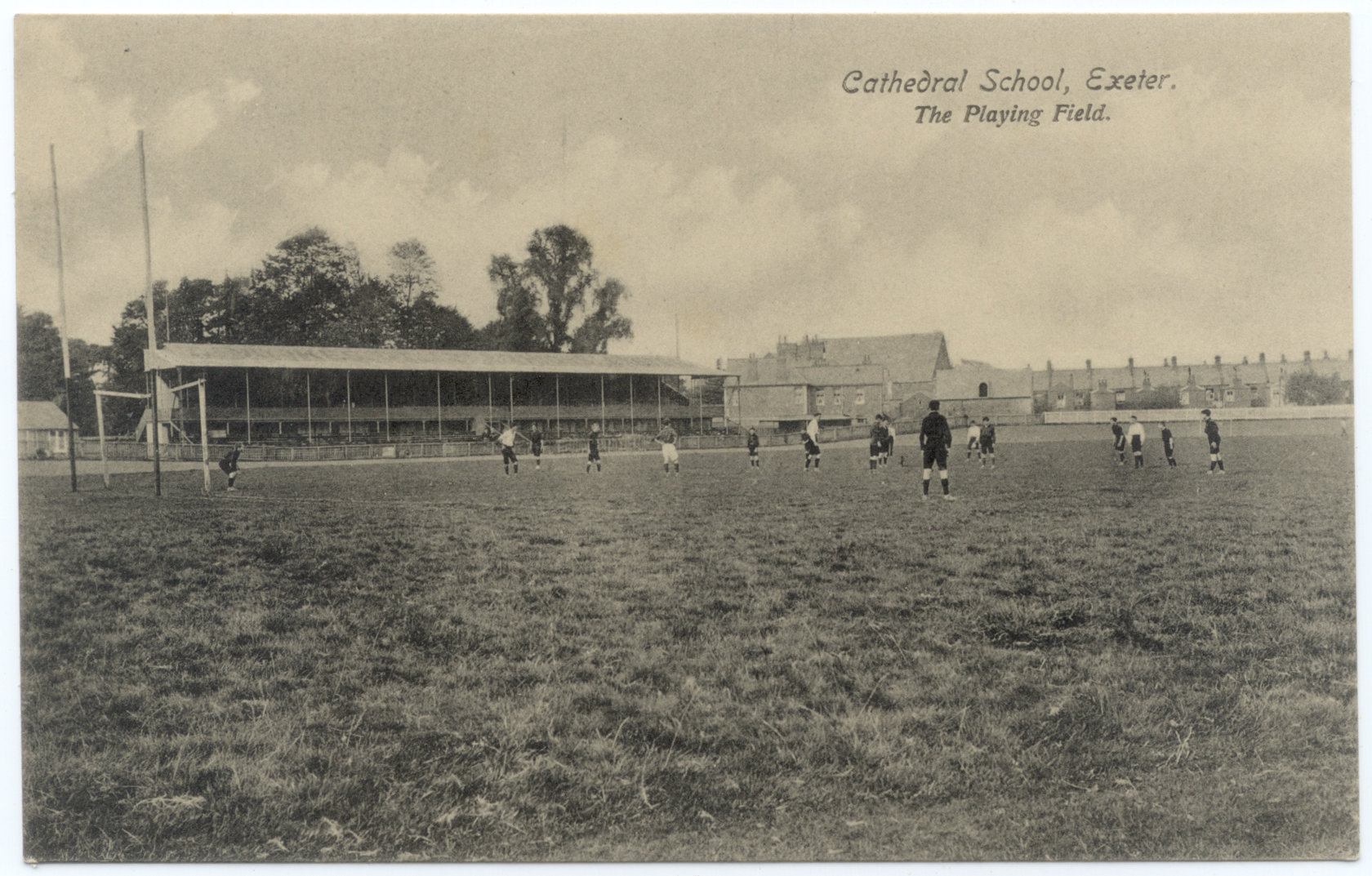
The postcards shown here were produced in 1912 to showcase the new facilities and recruit new pupils.
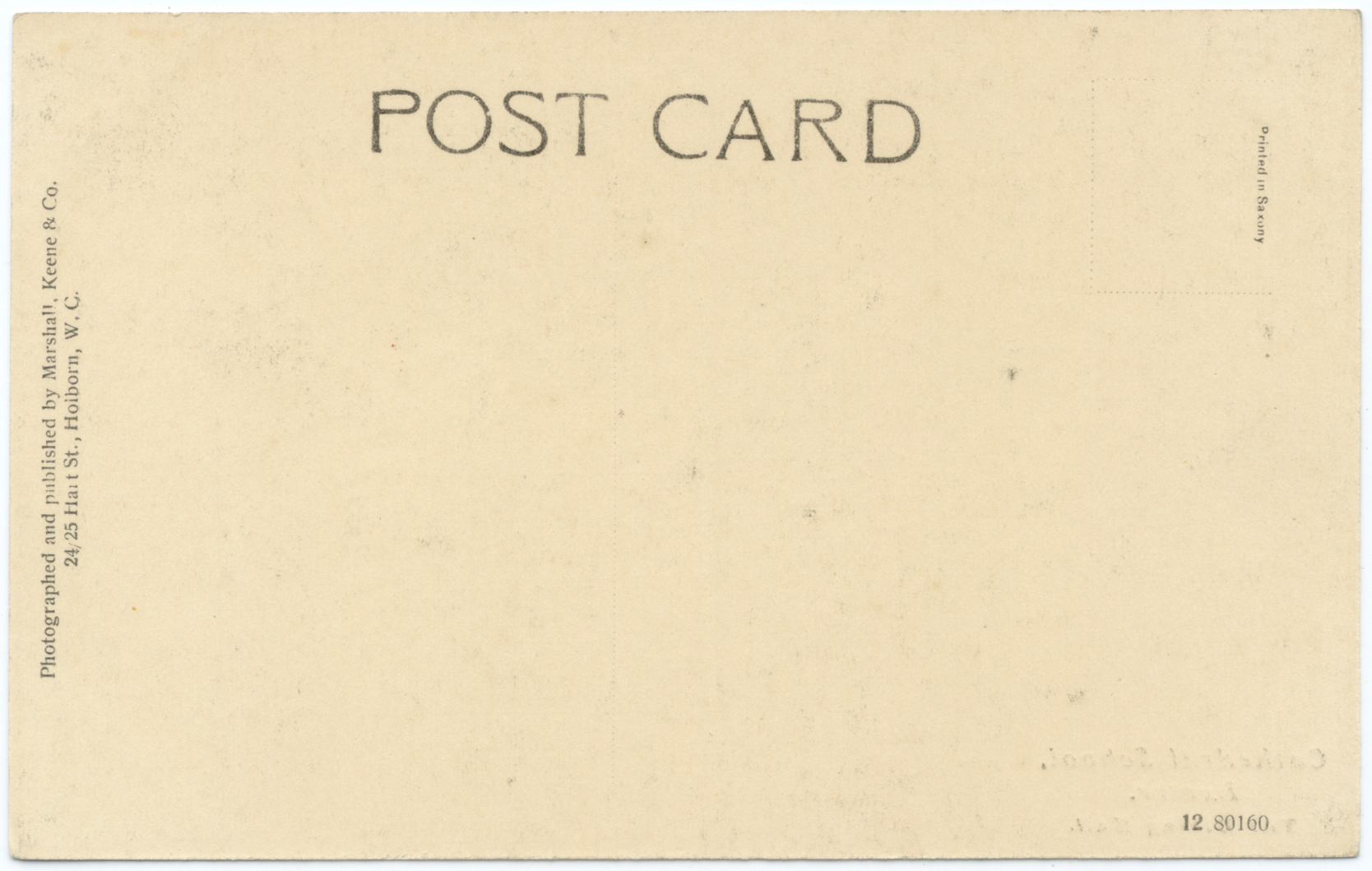 Details on the back of each card indicate that the photographs were taken by Marshall, Keene & Co., 24-25 Hart Street, Holborn, London. They were printed in Saxony, Germany. Each has a unique serial number on the back, prefixed by the number 12 in bold. The prefix was the company's way of showing the date of production, which here was 1912. Without this prefix, establishing such a close date for the cards would likely have been challenging.
It is uncertain how many cards were in the series. The ten cards encountered so far by the web editor have serial numbers running from 80143 to 80176. It seems unlikley that the serial numbers imply 34 cards were produced. Perhaps the numbers simply show the negative numbers of the finally selected print-run.
 The school featured in the cards lay behind houses 9 to 11 on the street on the north side of the Cathedral. It stood on part of the area formerly occupied by the residence of the Archdeacon of Totnes. Sadly, it was almost totally destroyed by bombing in 1942 (this archive has several images of this). The remains were cleared away after the war and the school was moved across the Close to its current location in Palace Gate.
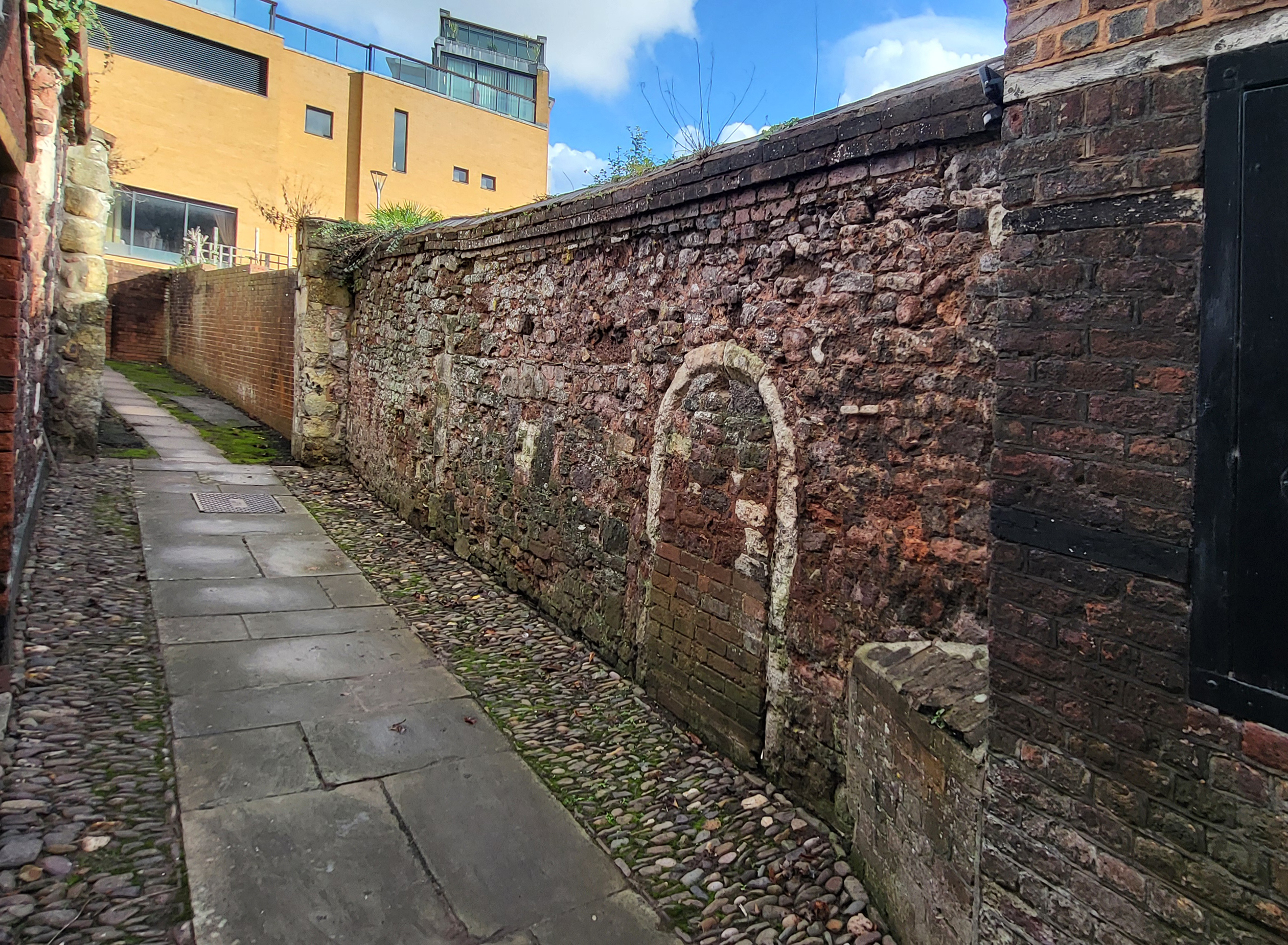
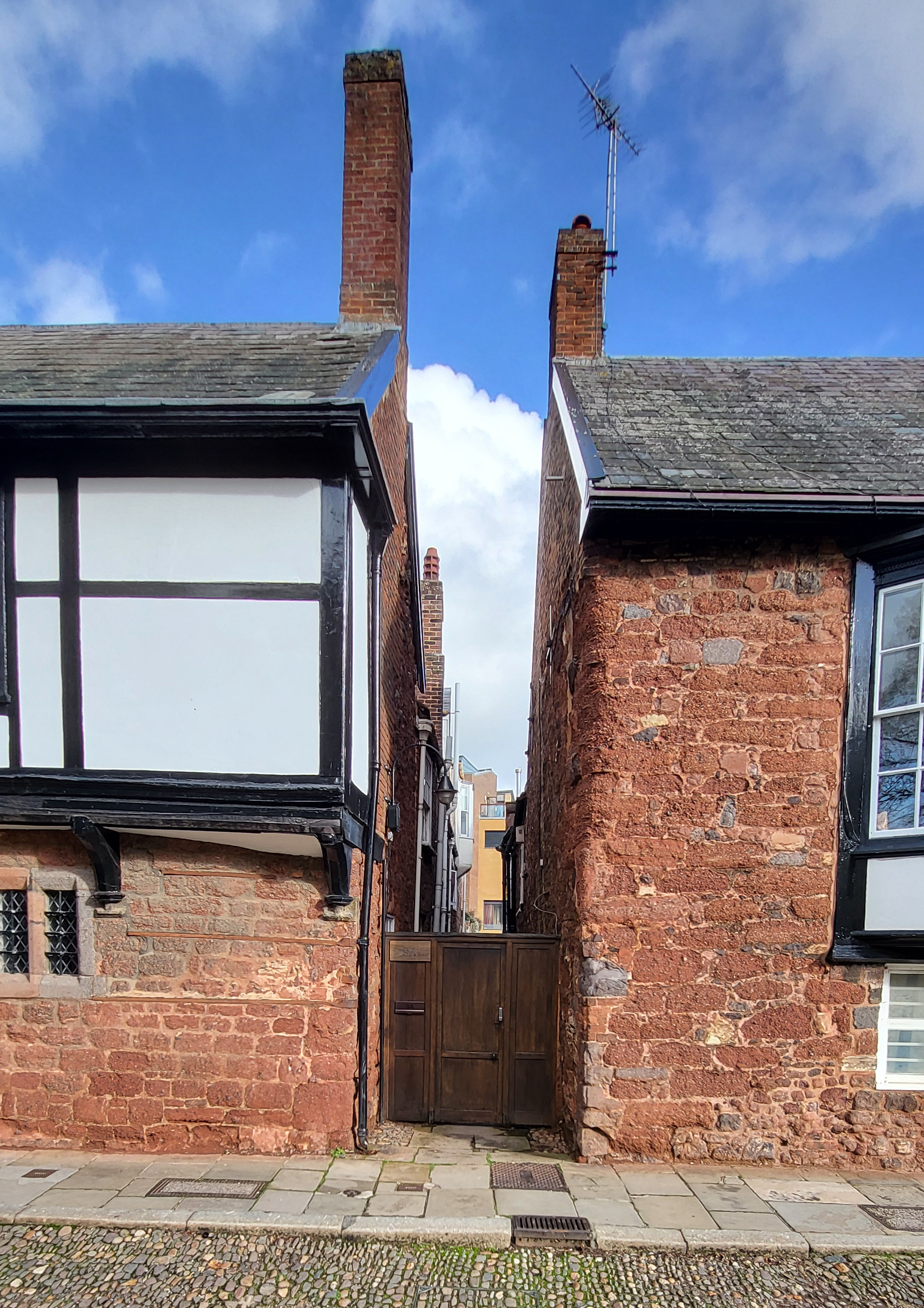
All that can be seen now of this school is the entrance from its cathedral side. This was via a doorway and alleyway between numbers 9 and 10 The Close (shown below).
The pre-1942 school also features in this archive in pages from the 1940s, several early memoirs of choristers and Richard Langhorne who was Headmaster there from 1915 until the bombing.
The images show a school very different in character from one today. Click on the images to see larger versions.
|
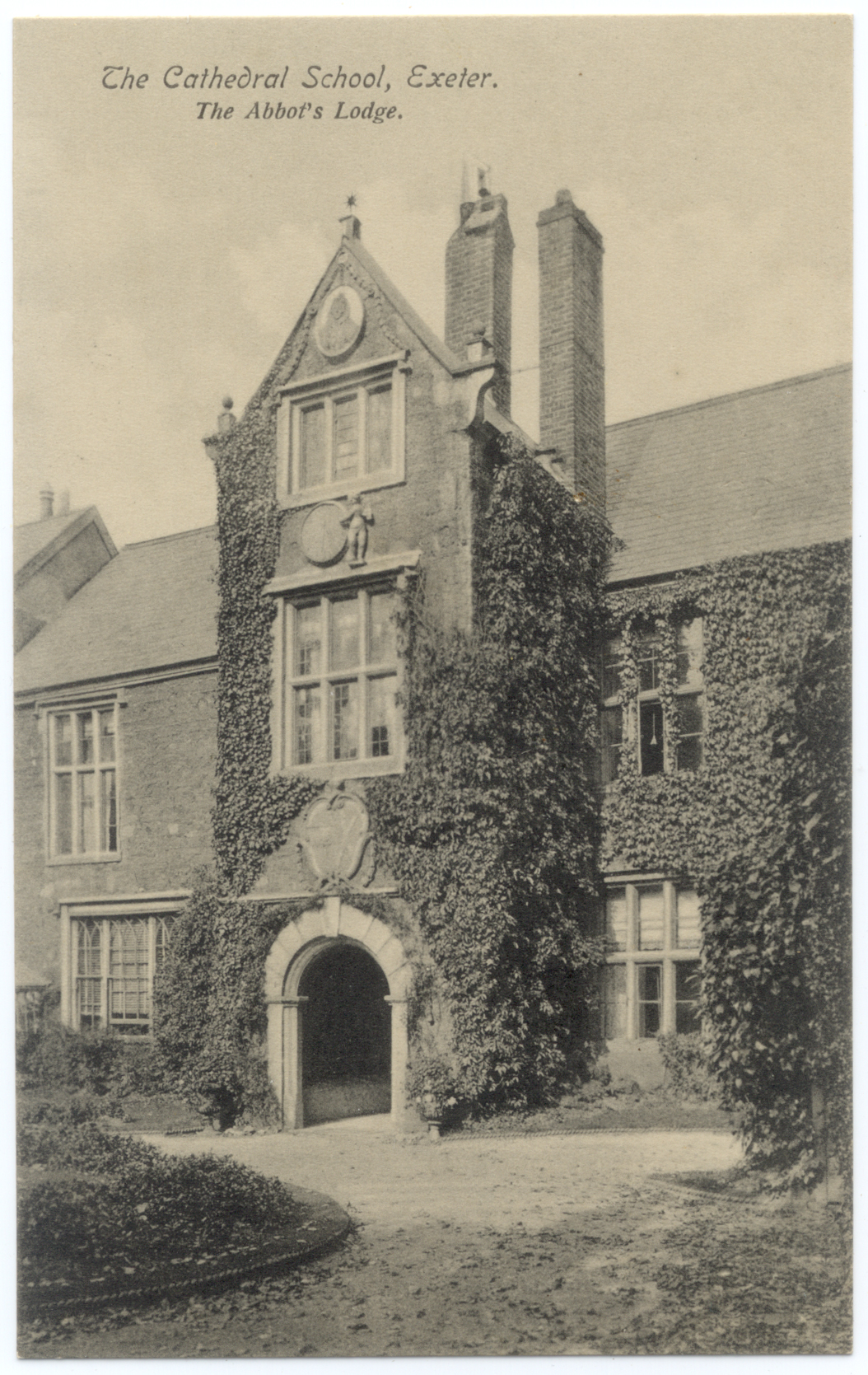
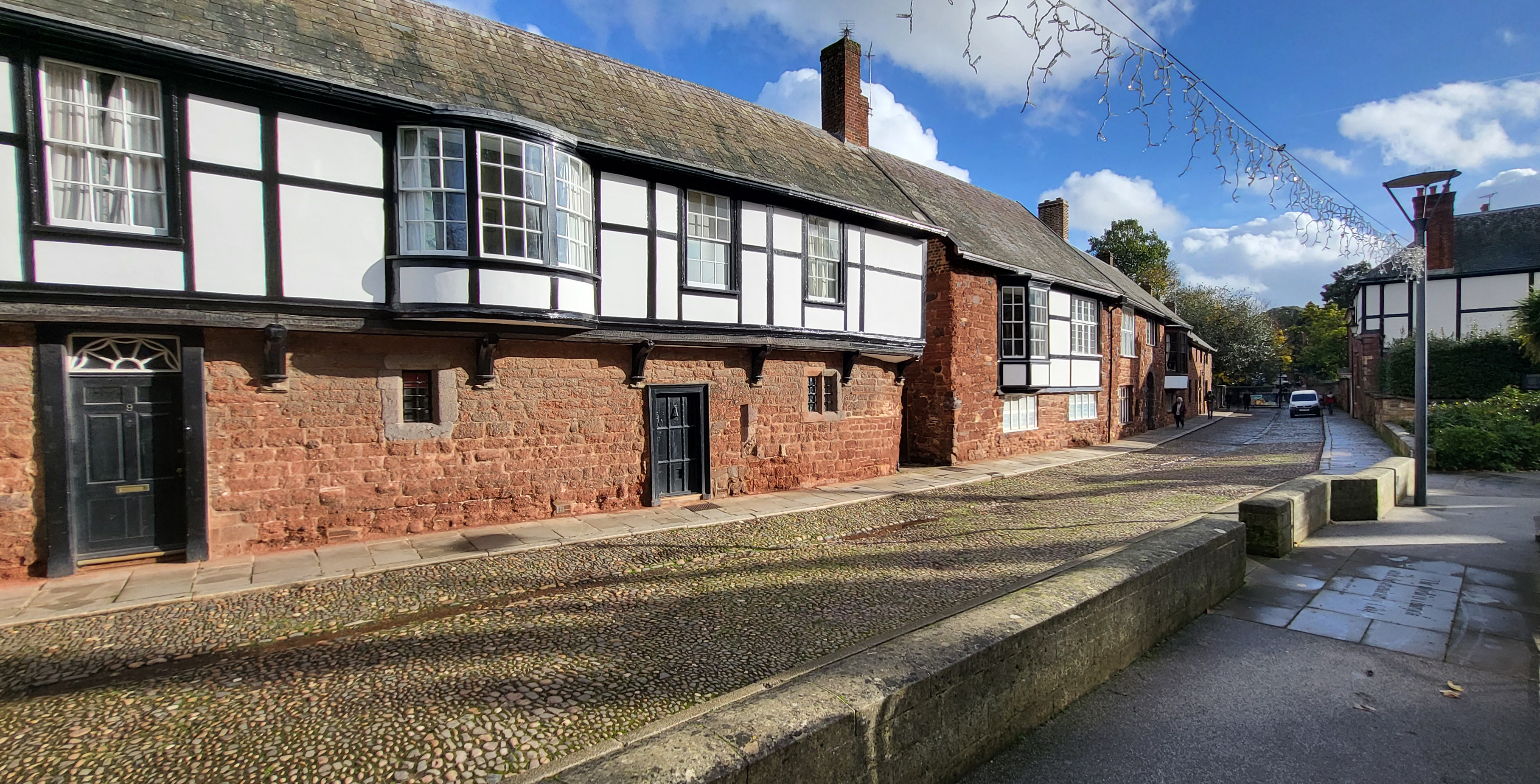
The Abbot's Lodge This was the Headmaster's family house. The building originated from the fifteenth century. It had been owned by Buckfast Abbey, 20 miles west of Exeter, for use as an Abbot's lodge in the city. The modern name stemmed from this. Number 11 The Close (reconstructed after near total destruction in 1942) formed the gatehouse to the lodge. |
|
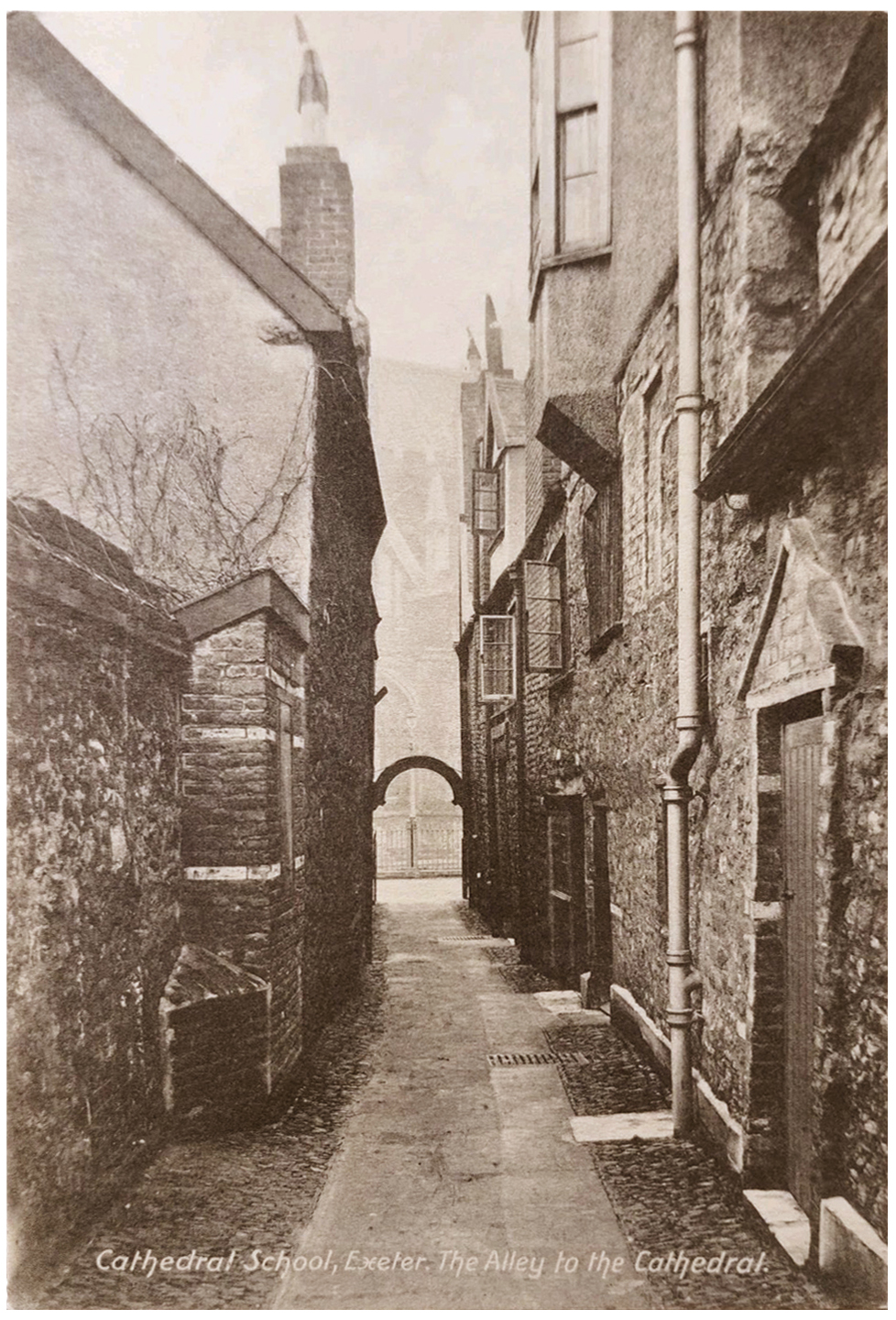
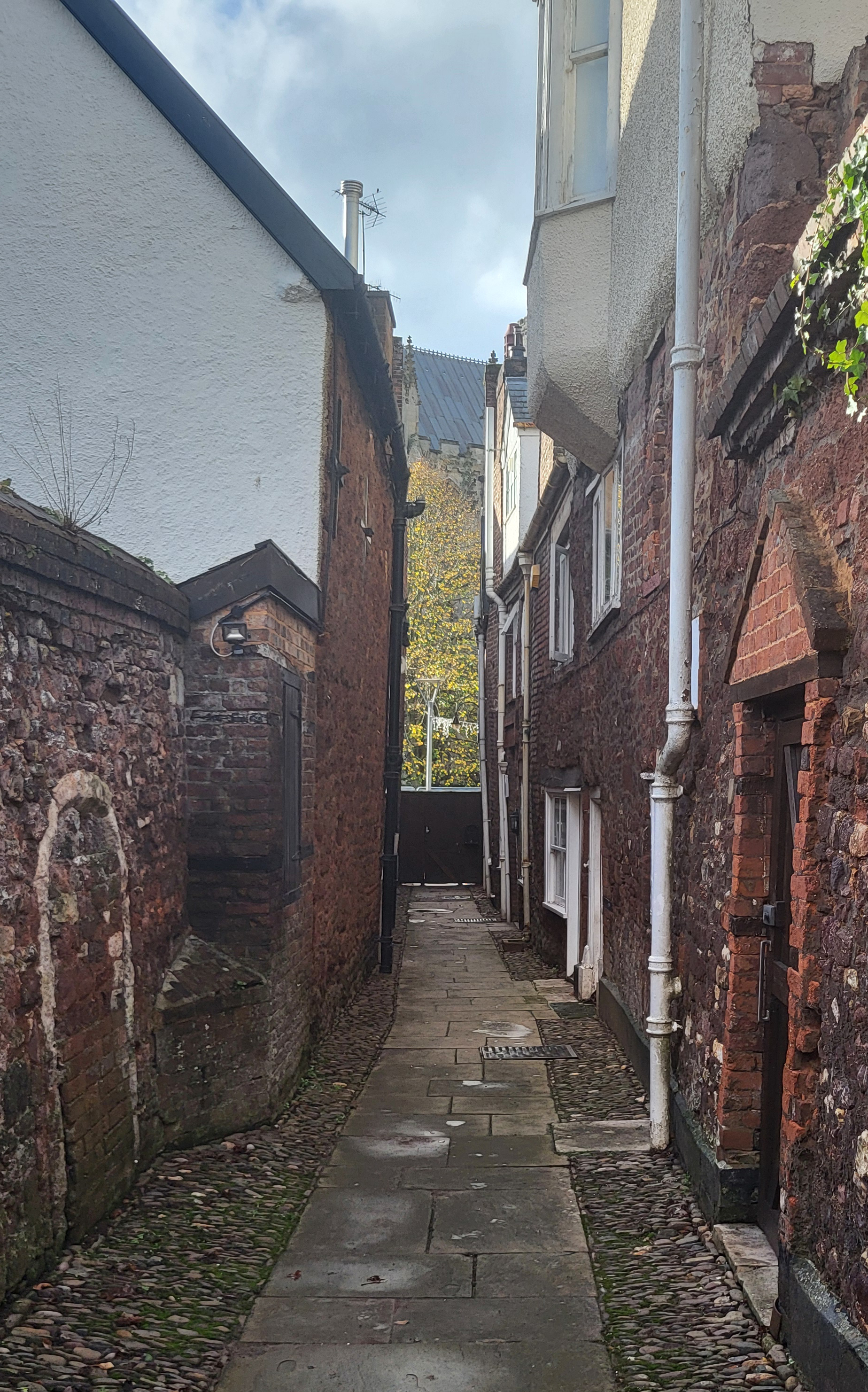
The Alley to the Cathedral Currently called 'Chorister Alley'. Number 9 The Close is on the right-hand end of the alley. Number 10, the current Deanery, is on the left. The 1912 photographer has his back to the entrance that ended the lane at this point and led into the School area. A former chorister, Denis Vercoe, describes the alley and the entrance in his memoirs: "a dark alleyway, lighted by one gas holder; at the head of this lane a door that filled the lane, with a small inner door let into it, admitting us to the Choir School yard itself." The alley now continues to the small street that runs behind the houses of the Close, formerly called Chapel Lane, or Little Egypt). |
 |
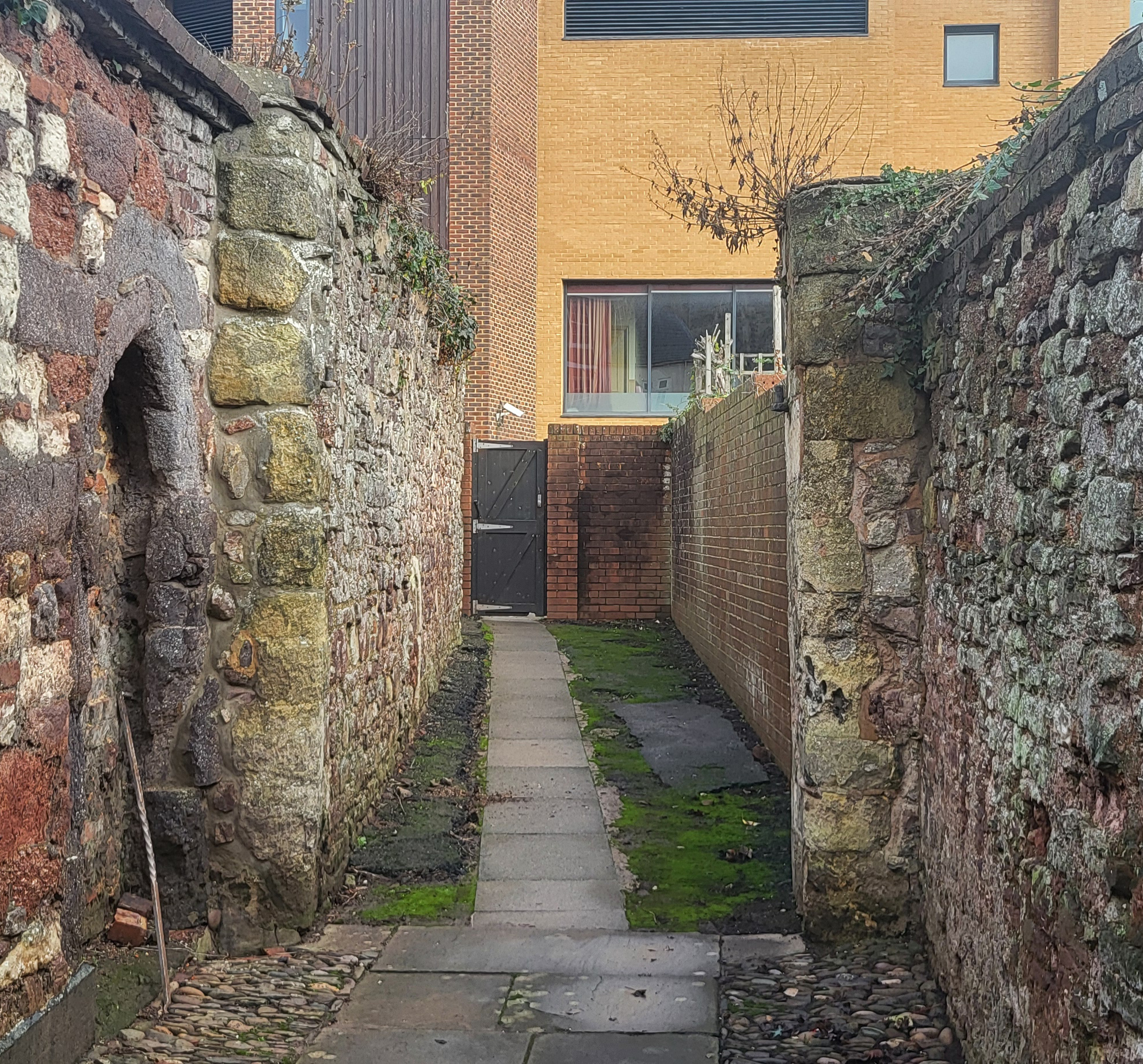 |
| The alley in 2025, looking in the opposite direction to the previous two photos, towards the former school entrance, with the narrower-paved post-War continuation to the street beyond it. A wall down the side of the old school area is on the right, with a much older, blocked arched doorway visible within it. | |
|
|
|
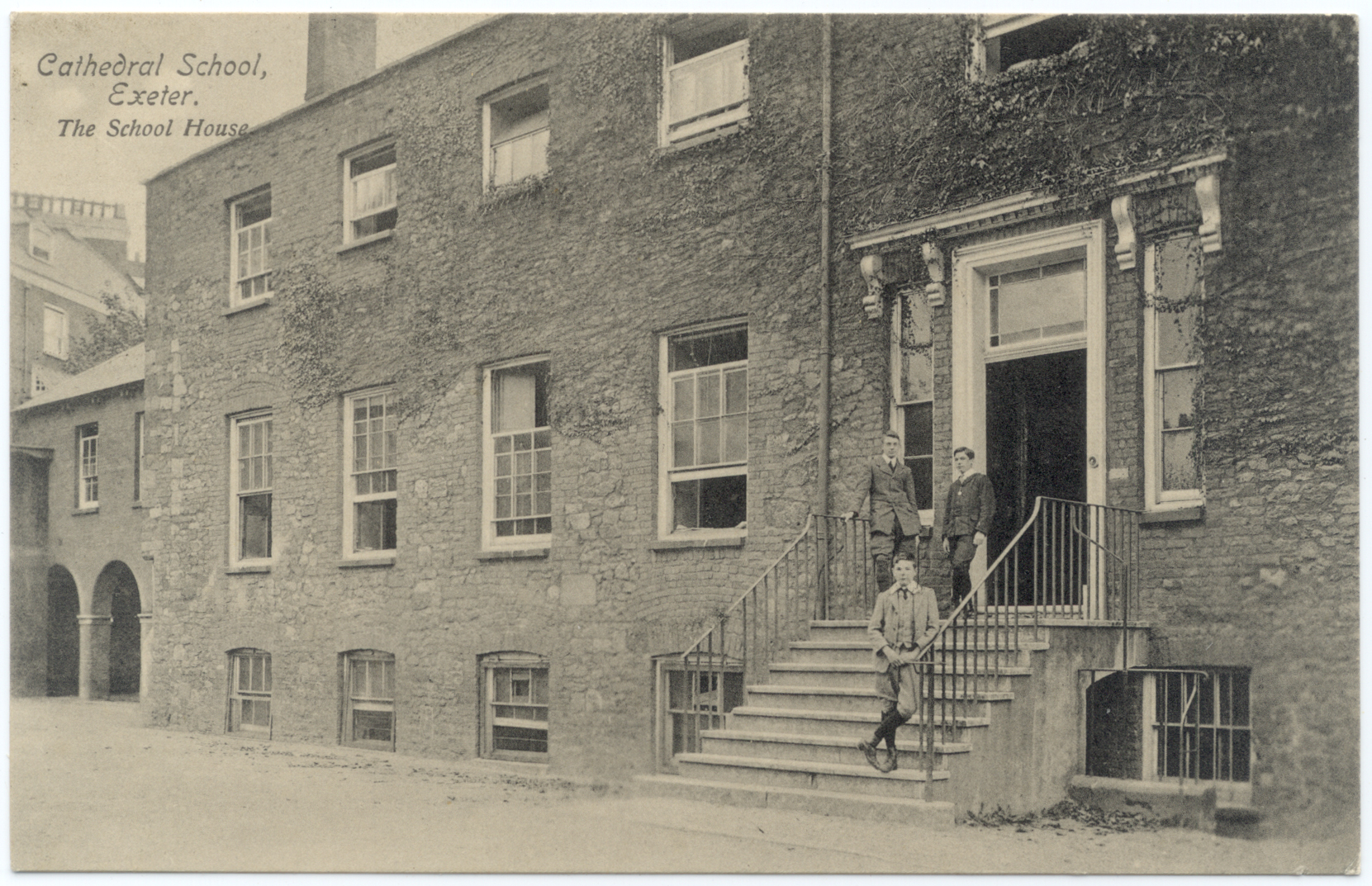
The School House This was the main building used by the boys. |
|
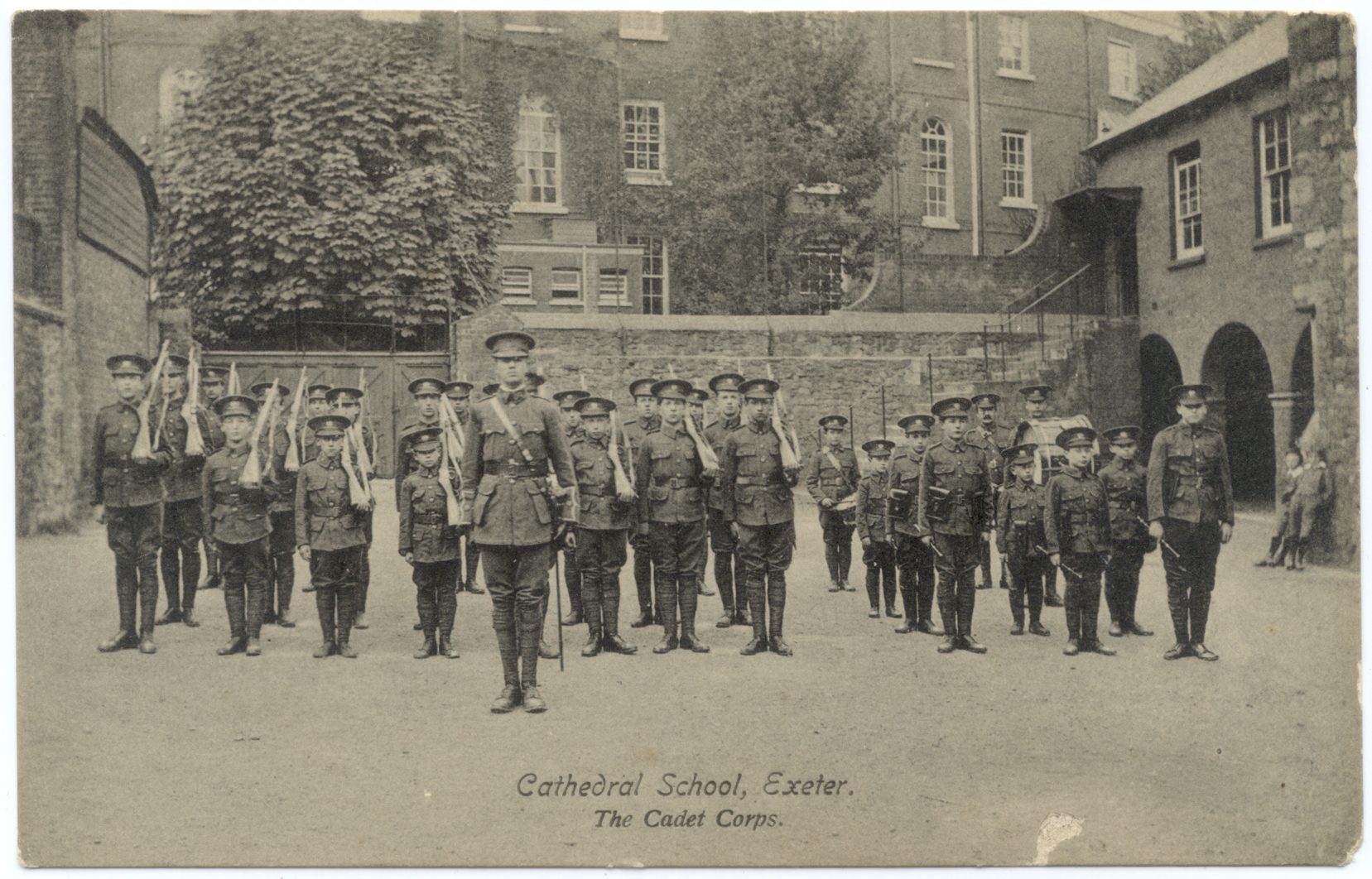
The Singing School This was at the end of the School House, on the first floor of the building with an arcaded lower floor, visible in the previous photo. Access to it was via a staircase, which can be seen in the Cadet Corps photo below. |
|
The Cadet Corps |
|
A Classroom |
|
The Gymnasium |
|
The Dining Room |
|
The Studio This was presumably an artroom, from the card's title, but it seems very luxurious for such a school room! |
|
The Playing Field This is the former ground of Exeter Rugby Club, known as the County Ground, situated in the St Thomas area of Exeter until 2006. This photo is featured on the web page of the history of Exeter Chiefs, but there is no comment that the players are actually from the Cathedral School. |

Information about the school in Paton's List of Schools, edition for 1911-1912
In the section: Scholarships and Fees (page 12)
Exeter. Cathedral School (The Close).—Choristerships (3 or 4 annually), reduce school fees from £50 to about £12, an average of five years, as vacancies occur, usually advertised in "Guardian." Essential qualifications, good voice and ear, and general intelligence. For candidates, age limit 8 to 12 years, but for notice of vacancies apply to Head Master.
[£50 in 1912 = £4,966 in September 2025]
In general list of schools, page 356:
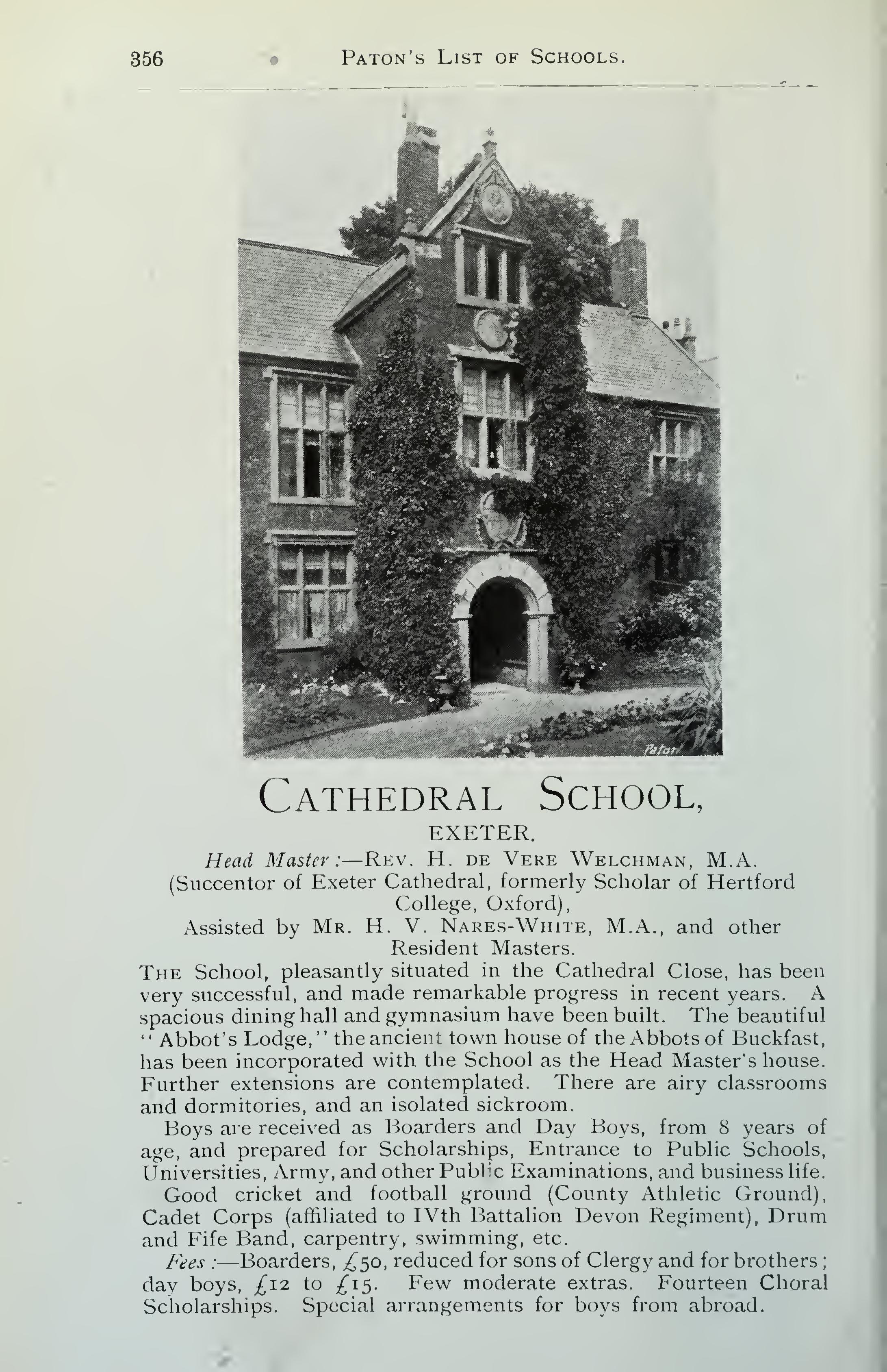
(links to high-resolution version)
Cathedral School,
EXETER.
Head Master:—Rev. H. de Vere Welchman, M.A.
(Succentor of Exeter Cathedral, formerly Scholar of Hertford College, Oxford),
Assisted by Mr. H.V. Nares-White, M.A., and other Resident Masters.The School, pleasantly situated in the Cathedral Close, has been very successful, and made remarkable progress in recent years. A spacious dining hall and gymnasium have been built. The beautiful "Abbot's Lodge," the ancient town house of the Abbots of Buckfast, has been incorporated with the School as the Head Master's house. Further extensions are contemplated. There are airy classrooms and dormitories, and an isolated sickroom.
Boys are received as Boarders and Day Boys, from 8 years of age, and prepared for Scholarships, Entrance to Public Schools, Universities, Army, and other Public Examinations, and business life. Good cricket and football ground (County Athletic Ground), Cadet Corps (affiliated to IVth Battalion Devon Regiment), Drum and Fife Band, carpentry, swimming, etc.
Fees:—Boarders, £50, reduced for sons of Clergy and for brothers; day boys, £12 to £15. Few moderate extras. Fourteen Choral Scholarships. Special arrangements for boys from abroad.
Acknowledgements and Sources
The text about the early history of the school comes from an article featuring some of the photos written by Ellie Jones, Exeter Cathedral Archive, published in Exeter Cathedral Life 12.3.2021.
Demolition Exeter. The Abbot's Lodge, Cathedral Close
All cards except for the one of the alley are in Mike Dobson's archive of cathedral material.
2025 photos by Mike Dobson.